
Views: 0 Author: Site Editor Publish Time: 2026-04-12 Origin: Site
In today’s connected commercial environment, the quality of a communication cable can influence far more than signal transmission alone. It can affect system reliability, operational efficiency, data stability, maintenance costs, and even long-term business growth. Whether a company is building a new network infrastructure, upgrading factory automation lines, improving office connectivity, or supporting intelligent equipment in demanding industrial conditions, selecting the right cable is a practical and strategic decision. The challenge is that many businesses focus only on the initial price or a familiar cable type, while overlooking factors such as bandwidth demand, transmission distance, shielding performance, installation environment, and future scalability. Choosing the ideal communication cable means understanding how the cable will function in real-world business operations, not just how it appears in a specification sheet.
Communication cables are the physical foundation of many modern systems. They connect control equipment, network devices, production lines, monitoring systems, and communication infrastructure. If the wrong cable is selected, the results may include unstable transmission, signal loss, higher downtime, costly maintenance, or premature replacement.
For businesses, the right cable choice helps support:
· stable signal transmission
· efficient data communication
· lower maintenance frequency
· improved equipment coordination
· stronger long-term return on investment
A communication cable is not simply a commodity. In many applications, it is part of the performance architecture of the business itself.
A communication cable is a cable designed to transmit data, voice, signals, or control instructions between devices, systems, or locations. Depending on the application, it may be used in office networking, industrial automation, telecommunications, security systems, transport infrastructure, or smart building projects.
Different communication cables are built for different purposes. Some prioritize high-speed data transmission, while others focus on durability, interference resistance, or stable performance across long distances.
Common categories may include:
· twisted pair cables
· coaxial cables
· fiber optic cables
· control communication cables
· shielded industrial communication cables
Because the application range is wide, there is no one-size-fits-all answer for every business.
To choose the right communication cable, businesses first need a practical view of the main types available and their common uses.
Cable Type | Typical Use | Main Advantage | Common Limitation |
Twisted Pair Cable | Office networks, telecom systems | Cost-effective and widely used | More sensitive to interference over distance |
Shielded Twisted Pair | Industrial systems, high-interference areas | Better EMI protection | Higher cost than unshielded versions |
Coaxial Cable | Surveillance, broadcasting, signal distribution | Stable signal structure | Less flexible for modern high-speed data needs |
Fiber Optic Cable | Data centers, backbone networks, long-distance transmission | High speed and long-distance performance | Installation and termination can be more demanding |
Industrial Communication Cable | Factory control and automation | Built for harsh environments | Must be matched carefully to protocol and equipment |
This comparison shows why choosing a business communication cable depends heavily on the actual working environment and technical requirements.
One of the most common mistakes in communication cable selection is beginning with product names rather than business needs. The better approach is to start with the application.
Ask the following questions first:
· What devices need to be connected?
· Is the application transmitting data, control signals, voice, or all three?
· Will the cable be used indoors, outdoors, underground, or in industrial workshops?
· Does the system require high speed, long distance, or strong anti-interference performance?
· Will the installation need to support future expansion?
A cable that works perfectly in a standard office may fail quickly in a plant filled with vibration, oil, heat, or electromagnetic interference. Likewise, a high-performance industrial communication cable may be unnecessary for a simple short-distance commercial setup. The ideal choice comes from matching cable design to operational reality.
Businesses often assume that buying the highest-specification cable is always the safest decision. In practice, it is more effective to choose a cable whose bandwidth and transmission capability match both present and near-future needs.
If a company only requires moderate-speed internal communication, an advanced premium solution may create unnecessary cost. On the other hand, choosing a cable with limited transmission capability in a rapidly growing network can lead to expensive upgrades later.
High-speed transmission is especially important in:
· data-intensive office networks
· surveillance systems with high-resolution video
· intelligent manufacturing equipment
· centralized control and monitoring systems
· enterprise communication backbones
Some business systems do not require extreme bandwidth, but they do need stable and uninterrupted signal transmission. In control systems, for example, consistent communication may be more important than the highest theoretical speed.
This is why communication cable selection should be based on total application value rather than headline specifications alone.
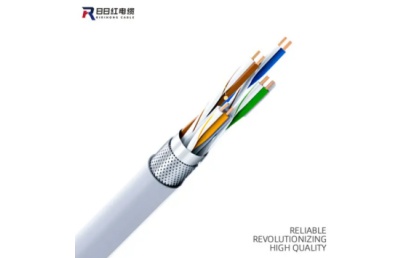
A cable’s installation environment may be the single most important factor in long-term reliability. The same cable can perform very differently depending on temperature, humidity, chemical exposure, movement, and mechanical stress.
In office spaces, hotels, retail buildings, and standard communication rooms, cable requirements are often less severe. Flexibility, cost control, and transmission performance may be the main concerns.
In factories, outdoor installations, tunnels, energy facilities, and heavy-duty equipment systems, communication cables may face:
· high temperatures
· moisture
· oil and chemicals
· continuous vibration
· electromagnetic interference
· bending or repeated movement
For these environments, industrial communication cable options with reinforced jackets, shielding, and higher durability standards are often the better choice.
A cable that is technically correct but environmentally unsuitable can quickly become a maintenance problem.
In many business settings, especially industrial ones, signal interference is a serious concern. Motors, inverters, switching equipment, and power lines can all create electromagnetic interference that affects communication stability.
This is where shielding becomes important.
Unshielded cables can work well in relatively clean environments and are often more economical. However, where interference is likely, shielded communication cable designs can help maintain signal integrity and reduce operational issues.
Shielding is often recommended when:
· communication cables run close to power cables
· equipment operates in high-noise electrical environments
· signal consistency is business-critical
· the installation spans multiple electrically active zones
For many businesses, paying slightly more for better shielding can reduce future troubleshooting and system instability.
Another factor businesses should evaluate is the physical routing of the cable. Transmission distance, bending requirements, and installation complexity all matter.
A cable used across a short cabinet connection is different from one routed across a production hall or between buildings. Long-distance communication may require stronger signal retention or fiber-based solutions. Tight routing paths may require better flexibility. Moving equipment may need cables designed for dynamic applications.
Consider these practical questions:
· How far does the signal need to travel?
· Will the cable remain fixed or move regularly?
· Are there tight bends or limited installation spaces?
· Is the cable part of a machine, a building, or an outdoor infrastructure project?
Ignoring installation realities during purchasing often leads to unnecessary replacement or difficult field adaptation later.
Choosing the ideal communication cable for your business is not simply about selecting a standard product from a list. It is about understanding how communication stability, environmental resistance, installation conditions, and future expansion all work together in one solution. In our view, the most suitable cable is the one that supports reliable performance over time, reduces avoidable maintenance, and matches the real demands of the operating environment instead of only satisfying a short-term purchasing target. At RRH CABLE. Co., Ltd., we believe businesses benefit most when cable selection is approached as a technical and operational decision rather than just a price comparison exercise. If you are evaluating communication cable options for commercial systems, industrial applications, or customized project requirements, you are welcome to learn more from our team. We are always ready to discuss practical specifications, application suitability, and product choices in a straightforward way that helps customers make more confident decisions.
The most important factor is the actual application. A cable should be selected according to transmission needs, environment, installation method, and system reliability requirements rather than by price alone.
Not always. Fiber optic cable is excellent for high-speed and long-distance transmission, but it may not be necessary for every business setup. In some cases, other cable types provide a more practical and cost-effective solution.
Not in every case, but shielding is often highly recommended where there is strong electromagnetic interference, nearby power equipment, or strict signal stability requirements.
A business can avoid overpaying by clearly defining its technical needs, installation conditions, and future expansion plans, then comparing cable options based on total value rather than only the highest available specification.
