
Views: 0 Author: Site Editor Publish Time: 2025-09-23 Origin: Site
In today’s interconnected world, the demand for electricity is growing faster than ever before. Cities are expanding, industries are becoming more power-intensive, and renewable energy projects are delivering electricity from remote areas to urban centers. To meet these demands efficiently, extra high voltage (EHV) power cables have become a cornerstone of modern power transmission. Designed to carry voltages above 220 kV, EHV cables enable the delivery of vast amounts of electricity across long distances with minimal losses, ensuring both efficiency and reliability in mega infrastructure projects.
This article explores the significance of EHV cables in modern power systems, their technical advantages, safety considerations, and future trends in power transmission.
EHV cables are specialized power cables that transmit electricity at very high voltages, typically ranging from 220 kV up to 800 kV and beyond. Unlike low or medium voltage cables, EHV cables are engineered to handle massive power flows while minimizing resistive losses and maintaining system stability.
Key Components of EHV Cables:
Conductor – Usually copper or aluminum, with extremely high conductivity to carry large amounts of current efficiently.
Conductor Shield – Ensures uniform electric field distribution, preventing dielectric stress.
Insulation – Cross-linked polyethylene (XLPE) or oil-impregnated paper, chosen for high dielectric strength and thermal resistance.
Insulation Shield – Maintains stable voltage distribution and protects against partial discharges.
Metallic Sheath – Provides grounding and protects against moisture penetration.
Outer Sheath – Guards the cable against mechanical damage, chemicals, and environmental exposure.
By combining these elements, EHV cables deliver both strength and reliability, making them indispensable for mega power transmission projects.
As electricity demand continues to rise, the limitations of traditional power transmission methods become more evident. EHV cables address these challenges by:
Electricity transmitted at higher voltages experiences significantly lower current for the same power level, which minimizes resistive (I⊃2;R) losses. This results in more efficient power delivery over long distances.
Mega power plants, offshore wind farms, and cross-border interconnections require massive transmission capacities. EHV cables allow gigawatts of electricity to flow through a single line, reducing the need for multiple transmission paths.
In densely populated urban areas, overhead lines are often impractical due to space limitations and aesthetic concerns. Underground or submarine EHV cables provide a safe and space-efficient solution.
Renewable energy sources are often located far from consumption centers. EHV cables allow clean energy generated from offshore wind farms, deserts, or hydro plants in remote regions to reach cities without significant losses.
Choosing the right Extra High Voltage (EHV) cable involves evaluating a wide range of technical and operational factors. Because these cables are used in mission-critical projects—such as cross-country transmission lines, offshore wind farms, and urban underground grids—any compromise in performance could lead to large-scale power interruptions or safety incidents. Below are key considerations:
Voltage Rating
EHV cables must be carefully engineered to handle the system’s maximum voltage, often exceeding hundreds of kilovolts, while maintaining a suitable safety margin. A higher voltage rating not only ensures reliability under normal load conditions but also provides resilience against unexpected surges, switching impulses, and lightning strikes. Inadequate voltage rating can cause dielectric breakdown, leading to catastrophic failures that are costly to repair.
Thermal Performance
High-power transmission generates substantial amounts of heat as electrical current flows through the conductors. Without effective thermal management, excessive heat can degrade insulation materials and shorten the service life of the cable. EHV cables often employ XLPE (cross-linked polyethylene) insulation or fluid-filled designs to improve heat dissipation. Additionally, some installations require advanced thermal monitoring systems that continuously measure cable temperatures, ensuring that operating limits are never exceeded.
Mechanical Strength
The size and weight of EHV cables make them particularly vulnerable during installation and operation. They must endure mechanical stresses such as bending, pulling, and crushing forces. In underground and submarine applications, cables also face soil pressure, seismic activity, or high water pressure. To address these challenges, manufacturers reinforce EHV cables with robust metallic sheaths, armoring, and protective jacketing, ensuring they remain structurally sound even in the harshest conditions.
Reliability and Longevity
Unlike low or medium-voltage cables that may be replaced more frequently, EHV cables are expected to perform reliably for decades, often with minimal intervention. This long service life is achieved through advanced insulation technologies, multi-layer protective sheaths, and stringent quality control during production. Long-term reliability also means lower maintenance costs and fewer outages, making EHV cables a cost-effective solution for mega power transmission projects in the long run.
Safety is a top priority in EHV cable projects due to the extreme voltages involved.
Insulation Integrity – XLPE insulation offers superior dielectric strength and reduces the risk of partial discharges.
Grounding and Shielding – Proper grounding systems minimize electromagnetic interference and protect workers.
Fire Safety – Low-smoke zero-halogen (LSZH) outer sheaths prevent flame spread and reduce toxic emissions during fires.
Environmental Protection – Sheath designs protect against water ingress, soil chemicals, and corrosion, ensuring reliable operation even in harsh environments.
These measures not only safeguard personnel but also protect multi-million-dollar infrastructure investments.
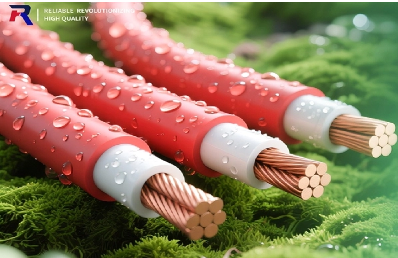
The installation of EHV cables requires precision and expertise due to their size, weight, and sensitivity.
Routing and Bending – Cables must follow carefully calculated bend radii to avoid insulation stress.
Jointing and Termination – Specialized joints and terminations are critical for maintaining electrical integrity across connections.
Temperature Management – Cable trenches, ducts, or tunnels must allow sufficient ventilation to dissipate heat.
Testing and Commissioning – High-voltage testing ensures insulation quality and overall system readiness before energization.
Proper installation is as vital as cable design in ensuring long-term performance.
EHV cables are central to some of the world’s largest power transmission projects. Examples include:
Cross-border interconnections – Linking national grids for greater energy security and trade.
Submarine transmission – Carrying renewable energy from offshore wind farms to mainland grids.
Urban megacities – Supplying electricity to cities where overhead transmission is impossible.
Industrial power corridors – Delivering bulk electricity to large-scale industrial zones.
Their versatility makes them essential for both developed and developing nations aiming to modernize infrastructure.
Technological innovations are shaping the future of extra high voltage cables:
Superconducting Cables – Offering near-zero losses, superconducting technology could revolutionize long-distance power transmission.
Digital Monitoring – Smart sensors integrated into cables can provide real-time data on temperature, load, and insulation health.
Eco-friendly Materials – New insulation compounds and recyclable materials are reducing environmental impact.
Ultra High Voltage (UHV) – Projects exceeding 800 kV are already underway in some regions, setting new benchmarks in efficiency.
These trends point toward an era of even more reliable, efficient, and sustainable power delivery.
Extra high voltage cables are the backbone of modern mega power transmission projects, enabling electricity to travel vast distances with minimal losses. They reduce transmission inefficiencies, support renewable energy integration, and provide reliable solutions for urban and cross-border infrastructure. While their design and installation are complex, the long-term benefits far outweigh the challenges.
For companies and engineers seeking dependable solutions in power transmission, www.rrhcable.com offers expertise and high-quality EHV power cables designed to meet the demands of modern infrastructure. Their advanced products and technical support ensure that mega power transmission projects operate safely, efficiently, and sustainably.
By investing in advanced EHV cable technology, the global power industry can continue to meet rising energy demands while building a more sustainable future.
