
Views: 0 Author: Site Editor Publish Time: 2026-04-10 Origin: Site
Power cables are often treated as standard components, yet they play one of the most critical roles in any electrical system. Whether used in residential buildings, industrial plants, infrastructure projects, renewable energy systems, or commercial facilities, cables are responsible for transmitting electricity safely and consistently from one point to another. When cable quality is overlooked, the consequences can include voltage loss, overheating, insulation failure, reduced efficiency, costly maintenance, and, in the worst cases, serious safety risks. That is why the discussion around high-quality power cables is far more important than it may first appear. Choosing the right cable is not only about meeting a basic specification on paper. It is about ensuring long-term durability, stable power delivery, installation reliability, and system safety in real operating conditions. For engineers, contractors, procurement teams, and project developers, understanding what defines a quality power cable is essential to building dependable electrical networks.
Electricity transmission depends on continuity, conductivity, and protection. A power cable must carry electrical current efficiently while withstanding environmental, mechanical, and thermal stress over time. When a cable performs poorly, the issue may not be visible immediately. In many cases, the real damage builds gradually through internal heating, insulation aging, or conductor instability.
High-quality cables matter because they help reduce:
· overheating risks
· power loss during transmission
· insulation breakdown
· premature system failure
· costly downtime and repairs
· fire hazards caused by poor electrical performance
A cable is not just a connection between two devices. It is a working component of the entire electrical system. If it fails, the stability of the system is compromised.
Not all power cables are manufactured to the same standard. Two cables may appear similar from the outside, but their long-term performance can be very different depending on conductor purity, insulation materials, manufacturing precision, and testing consistency.
A high-quality power cable is usually defined by several core characteristics:
The conductor must provide stable electrical transmission with low resistance and consistent structure.
The insulation layer must resist heat, voltage stress, moisture, and aging over time.
The cable should withstand bending, pulling, compression, and installation stress without losing performance.
A quality cable must be designed for the environment in which it will be used, including indoor, underground, outdoor, humid, high-temperature, or chemically exposed conditions.
Even if raw materials are good, poor processing can reduce the cable’s performance. Consistency in extrusion, stranding, shielding, and sheathing is a major indicator of quality.
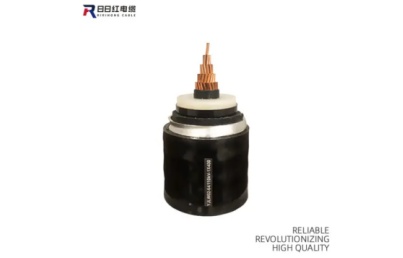
To understand why cable quality matters, it helps to look at the structure of a typical power cable. Each layer has a specific function, and the performance of the whole product depends on how these parts work together.
Component | Function | Why It Matters |
Conductor | Carries electrical current | Determines conductivity and energy efficiency |
Insulation | Prevents electrical leakage and short circuits | Essential for safety and voltage resistance |
Shielding or bedding | Adds protection and structural stability | Helps improve electrical and mechanical reliability |
Outer sheath | Protects against moisture, abrasion, and environment | Extends service life in demanding conditions |
Armor (if required) | Protects against impact and mechanical damage | Important for underground or industrial use |
This layered design explains why cable performance cannot be judged by appearance alone. A quality cable depends on the right materials in the right structure.
One of the first things buyers look at is the conductor material. In power cable production, copper and aluminum are the most common options. Both can be effective, but they serve different needs.
Copper is widely valued for:
· high conductivity
· good flexibility
· strong corrosion resistance
· dependable long-term performance
For many demanding applications, copper remains the preferred option because it supports efficient current flow and easier installation in certain environments.
Aluminum is often used where lighter weight and lower cost are important. It can be a practical choice in many applications, but conductor sizing and installation conditions must be considered carefully because aluminum has different conductivity and mechanical properties compared with copper.
It is not enough to know whether the cable uses copper or aluminum. The purity of the material, the stranding design, and the consistency of conductor manufacturing also affect performance. Inferior conductors may increase resistance, create unstable current flow, and reduce the cable’s useful life.
If the conductor carries the power, the insulation and sheathing protect the system. These layers are fundamental to safe and reliable energy transmission because they separate electrical current from the surrounding environment and shield the cable against external damage.
Common insulation materials include:
· PVC
· XLPE
· PE
· rubber compounds
Each material offers different performance characteristics.
PVC is widely used because it is economical and offers good electrical insulation in many standard applications.
XLPE is often chosen for higher-performance cables because it provides excellent thermal resistance, electrical strength, and aging performance.
The outer sheath protects the cable from:
· moisture
· abrasion
· sunlight
· chemicals
· physical damage during handling and service
In practical terms, insulation quality is one of the strongest indicators of whether a cable will remain safe over time. Weak insulation may not fail immediately, but under heat and voltage stress it can deteriorate faster than expected.
A good cable in the wrong application can still become a bad choice. That is why selection should always be based on actual service conditions rather than only price or general description.
Different projects may require different cable characteristics:
These applications often prioritize flame resistance, flexibility, and stable current carrying capacity.
Industrial environments may require greater resistance to oil, chemicals, abrasion, and mechanical stress.
Cables installed underground often need stronger sheathing, possible armoring, and moisture resistance.
Solar and energy infrastructure projects may require UV resistance, weather durability, and stable outdoor performance.
These applications may demand enhanced bending performance, load stability, and mechanical protection.
This is why power cable selection should always start with the question: What will the cable face in real use?
Low-quality cables do not always fail immediately after installation. In many cases, the risk develops gradually, making the problem harder to detect until the damage becomes costly.
Some common problems include:
· excessive conductor resistance
· unstable current carrying capacity
· insulation cracking
· overheating under load
· shorter service life
· installation damage due to weak structure
These issues can lead to system inefficiency, increased maintenance frequency, and greater safety exposure. In large projects, poor cable selection can also affect project reputation and long-term operating cost.
A cable with poor insulation uniformity may pass initial installation, but after repeated thermal cycles it can begin to degrade internally. Over time, this may cause partial failure, leakage current, or local heating. What looked like a lower-cost purchase at the beginning may result in higher replacement cost later.
Quality cable selection should include more than a product label. Standards and testing provide a more reliable basis for judging performance.
Important evaluation areas often include:
· conductor resistance
· insulation thickness
· voltage withstand performance
· flame resistance where required
· aging resistance
· mechanical strength
· dimensional accuracy
Testing matters because cable reliability is not theoretical. It must be proven through measurable performance. Procurement teams and project managers should pay attention to whether the manufacturer has a strong quality control process rather than relying only on basic catalog claims.
The importance of high-quality power cables goes far beyond basic electrical connection. They are a fundamental part of ensuring safe operation, efficient energy flow, and dependable system performance over time. From conductor quality and insulation strength to structural design, environmental suitability, and manufacturing consistency, every detail influences whether a cable can truly support safe and reliable energy transmission in real-world conditions. In our view, the best cable choices come from understanding both the technical demands of the application and the long-term expectations of the project. At RRH CABLE. Co., Ltd., we believe that power cables should deliver more than compliance on paper; they should offer practical confidence in installation, performance, and durability. For customers evaluating cable solutions for industrial, commercial, or infrastructure use, learning more from an experienced cable manufacturer can be a worthwhile step toward making a more reliable decision.
The most important feature is balanced overall performance, including conductor efficiency, insulation reliability, mechanical durability, and suitability for the intended application.
Not always. Copper offers higher conductivity and flexibility, but aluminum can also be suitable in many applications when properly sized and correctly installed.
Insulation affects safety, temperature resistance, service life, and environmental adaptability. Different applications require different insulation materials for reliable performance.
Buyers should review the application environment, electrical requirements, material specifications, quality testing, and supplier capability before making a purchasing decision.
