
Views: 0 Author: Site Editor Publish Time: 2025-09-22 Origin: Site
The demand for electricity continues to rise as industries expand, cities grow, and renewable energy projects scale up. Meeting this demand requires not only generating sufficient electricity but also delivering it efficiently across vast distances with minimal loss. This is where Power Cable technology—especially Ultra High Voltage (UHV) cables—plays a critical role.
Ultra High Voltage cables, typically rated above 800 kV, are engineered to handle massive amounts of electrical energy over long transmission distances. Their design reduces resistive losses, enhances grid stability, and supports sustainable growth in both industrial and urban environments. In this article, we’ll explore how UHV cables minimize energy loss, their construction, applications, advantages, and their growing role in shaping modern power infrastructure.
Whenever electricity travels through a conductor, resistance generates heat, resulting in energy loss. Over long distances, especially when transmitting gigawatts of power, even a small percentage of loss translates into enormous inefficiency and financial costs.
In industrial networks, energy loss can disrupt continuous processes, raising operational expenses. In urban networks, losses increase the strain on distribution systems, leading to higher electricity prices for consumers. UHV cables mitigate these issues by transmitting at extremely high voltages, thereby reducing current levels and minimizing resistive losses.
To understand how UHV cables minimize energy loss, it’s important to revisit the fundamentals:
Power (P) = Voltage (V) × Current (I).
For a given power level, increasing voltage allows current to be reduced proportionally.
Resistive loss (P_loss) = I⊃2; × R.
Since resistive loss is proportional to the square of the current, reducing current dramatically decreases losses.
By transmitting electricity at ultra-high voltages, UHV cables reduce current to a fraction of what it would be at lower voltages, which in turn minimizes resistive heating and improves efficiency.
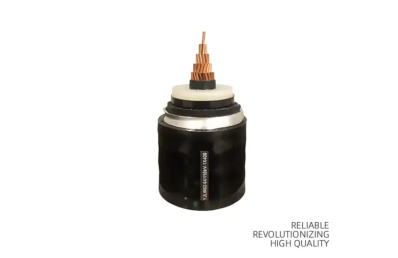
The effectiveness of UHV cables lies not only in high voltage transmission but also in their advanced construction. Key elements include:
Conductor Core: Typically made of high-purity aluminum or copper, engineered for optimal conductivity and mechanical strength.
Insulation Layer: XLPE (cross-linked polyethylene) or gas-impregnated paper is commonly used to prevent dielectric breakdown under extreme voltages.
Metallic Shielding: Ensures uniform electric field distribution and prevents external interference.
Protective Sheath and Armor: Provide mechanical durability, resistance to moisture, and protection against environmental conditions.
Together, these layers ensure safe, reliable, and efficient transmission of electricity at ultra-high voltages.
Industrial facilities, such as steel plants, chemical refineries, data centers, and large-scale manufacturing hubs, consume enormous amounts of electricity every hour. For these operations, even a minor voltage drop or energy loss can lead to costly downtime, reduced output, or damage to sensitive equipment. Ultra High Voltage (UHV) cables provide a reliable solution by ensuring efficient energy delivery across long distances with minimal loss.
Reduced Losses in Heavy Loads:
Industrial clusters often operate far from generation sources, requiring power transmission over extended distances. UHV cables, with their ability to transmit electricity at extremely high voltages and reduced current, significantly cut down resistive losses. This ensures that heavy machinery, furnaces, and continuous production lines receive stable, efficient power.
Stable Voltage Supply:
Machines used in steel rolling, petrochemical refining, or semiconductor manufacturing demand constant voltage. Fluctuations can cause disruptions, quality defects, or even catastrophic equipment failure. The advanced insulation and shielding of UHV cables maintain voltage stability, reducing risks and improving the reliability of power supply.
Cost Savings and Operational Efficiency:
Lower transmission losses directly translate into reduced energy costs for industries. Over time, these savings can be substantial, particularly in power-intensive sectors like aluminum smelting or pulp and paper production. Beyond financial benefits, stable and efficient power contributes to higher productivity and fewer unplanned interruptions.
Support for Expansion and Scalability:
Industrial zones rarely remain static. As production grows, so does the demand for electricity. UHV infrastructure is designed to accommodate rising loads without requiring complete redesigns or disruptive overhauls. This scalability makes it easier for companies to expand operations while maintaining energy efficiency.
Urban areas present unique challenges—high population density, concentrated energy demand, and limited space for new infrastructure. UHV cables help solve these issues in multiple ways:
High-Capacity Transmission: Cities can receive large quantities of power from distant power stations or renewable farms without excessive loss.
Underground Installation: UHV cables can be buried, saving valuable urban space while reducing visual and environmental impact.
Grid Stability: By minimizing losses, UHV systems prevent voltage drops and blackouts in cities with millions of electricity consumers.
Integration with Smart Cities: UHV cables can be combined with monitoring technologies to optimize efficiency and detect faults in real time.
Thus, UHV cable systems strengthen the backbone of modern urban electricity distribution, supporting both residential and commercial users.
The adaptability of UHV cables makes them essential across multiple sectors:
Cross-country Power Transmission: Delivering electricity from remote hydroelectric or solar farms to urban centers hundreds of kilometers away.
Offshore Wind Farms: Transmitting large amounts of renewable energy generated offshore back to mainland grids.
Industrial Corridors: Connecting clusters of factories and refineries to reliable power sources.
Urban Mega-Projects: Supplying consistent electricity to metros, airports, and skyscraper complexes.
Interconnected Grids: Facilitating regional and international energy exchange through cross-border networks.
UHV cables are more than just conductors—they represent a leap in power transmission technology. Advantages include:
Minimal Energy Loss: By operating at extremely high voltages, losses are reduced to just a fraction compared to lower voltage systems.
High Transmission Capacity: Capable of carrying thousands of megawatts, suitable for industrial and metropolitan demands.
Enhanced Reliability: Advanced insulation and monitoring systems ensure stable long-term performance.
Environmental Benefits: Efficient transmission means fewer power plants are needed to meet demand, reducing carbon emissions.
Scalability: UHV infrastructure supports future growth in demand without requiring major upgrades.
While UHV cables are highly effective, they come with challenges:
High Initial Cost: Installation requires advanced materials, engineering, and infrastructure.
Complex Maintenance: Specialized expertise is needed for monitoring and repair.
Heat Dissipation: Managing thermal effects is crucial for long-term efficiency.
Ongoing innovations address these issues. For example, advanced XLPE insulation improves durability, while real-time digital monitoring ensures early fault detection. Research is also exploring superconducting cables, which could one day deliver power with near-zero losses.
As the world shifts towards renewable energy and decarbonization, UHV cables will play a vital role. Offshore wind farms, desert-based solar parks, and cross-border energy sharing all depend on high-capacity, low-loss transmission systems. Urbanization trends also demand more efficient and compact power delivery solutions, making UHV cables an essential component of smart and sustainable cities.
With continued innovation, UHV cables will not only minimize energy loss but also transform the global power landscape by enabling greener, more reliable, and interconnected grids.
Ultra High Voltage cables are the backbone of modern power infrastructure, enabling the efficient transmission of electricity over vast distances while minimizing energy loss. From powering industrial hubs to supplying electricity to growing urban networks, UHV cables ensure stability, efficiency, and sustainability.
For industries, engineers, and city planners seeking reliable solutions for large-scale power distribution, UHV cables represent the future. To learn more about high-quality Power Cable solutions—including UHV, HV, and LV cables—visit www.rrhcable.com. You may find the expertise and products that perfectly match your project needs.
