
Views: 0 Author: Site Editor Publish Time: 2025-11-21 Origin: Site
In modern infrastructure, power cables form the backbone of energy transmission—carrying electricity safely and efficiently from generation plants to industrial facilities, residential buildings, and transportation systems. While conductors often receive the most attention, the insulation and shielding layers of a power cable are equally critical. These components determine not only the cable’s electrical performance but also its reliability, safety, and lifespan.
Power cables are exposed to a wide range of mechanical, thermal, and electrical stresses throughout their service life. Insulation and shielding protect the conductive core from these external influences and prevent current leakage, short circuits, and electromagnetic interference.
Insulation isolates the conductor, maintaining current flow along the intended path while resisting heat, moisture, and chemical degradation.
Shielding minimizes electromagnetic interference (EMI), enhances signal integrity, and protects the cable from external noise or induced voltage.
Without proper insulation and shielding, even high-quality conductors can fail prematurely, leading to energy losses, downtime, or safety hazards such as fires and electrical shocks.
The insulation layer is the first and most crucial line of defense in any power cable system. It prevents electrical current from escaping the conductor, protects against short circuits, and ensures safe and efficient power transmission. The choice of insulation material is determined by factors such as voltage class, temperature rating, mechanical stresses, installation environment, and exposure to chemicals, moisture, or UV radiation. Selecting the right insulation is essential not only for safety but also for ensuring the long-term reliability and performance of the cable system.
PVC remains one of the most commonly used insulation materials for low- and medium-voltage power cables due to its balance of affordability and durability.
Advantages:
Excellent resistance to moisture, chemicals, and abrasion, ensuring long-term protection in diverse environments.
Cost-effective and easy to process, which makes it suitable for large-scale production and general-purpose installations.
Self-extinguishing properties that help prevent fire propagation, enhancing safety in residential and commercial wiring.
Limitations:
Despite its popularity, PVC insulation has limitations. It softens at elevated temperatures (above 70–80°C) and may release toxic gases, such as hydrogen chloride, when burned. Therefore, it is not ideal for high-temperature, high-performance, or environmentally sensitive applications. PVC-insulated cables are most suitable for indoor electrical wiring, fixed installations, and low-voltage systems where thermal stress is limited.
XLPE has become the industry standard for medium- and high-voltage power cables, thanks to its superior electrical and thermal characteristics. The cross-linking process modifies the polyethylene’s molecular structure, improving its mechanical strength, heat resistance, and chemical stability.
Advantages:
High dielectric strength and low dielectric loss, which improve energy efficiency and reduce power loss during transmission.
Excellent thermal stability, allowing continuous operation up to 90°C and short-term peaks up to 250°C.
Outstanding resistance to aging, moisture ingress, and chemical corrosion, making it ideal for underground and outdoor installations.
Long service life with minimal maintenance requirements, lowering overall operating costs.
Applications:
XLPE-insulated cables are widely used in utility power distribution, industrial facilities, renewable energy installations (such as wind and solar farms), and offshore platforms. Their excellent performance under mechanical stress and temperature variation makes them reliable for demanding applications.
EPR insulation offers an excellent combination of flexibility, toughness, and high-temperature endurance. It is particularly suitable for environments where mechanical vibration, bending, or impact stresses are common.
Advantages:
Exceptional thermal endurance and flexibility, even at subzero temperatures.
High resistance to water absorption and ozone degradation, ensuring long-term insulation stability in humid or outdoor environments.
Excellent dielectric strength with resistance to corona discharge, minimizing insulation failures in high-voltage systems.
Applications:
EPR-insulated power cables are commonly found in mining, marine, and offshore installations, as well as in heavy industrial plants. They perform reliably in areas exposed to oil, chemicals, and extreme weather, where both flexibility and insulation strength are required.
For extreme environments or specialized industries, silicone rubber and advanced polymer insulations offer enhanced performance.
Silicone Rubber Insulation:
Silicone rubber can operate continuously at temperatures up to 180–200°C and retains flexibility even at -60°C, making it ideal for high-temperature applications such as furnaces, aerospace equipment, and motor windings. It is also flame-retardant, non-toxic, and resistant to radiation, which contributes to enhanced safety and longevity.
Other Specialized Compounds:
Fluoropolymers (e.g., PTFE, FEP): Provide outstanding dielectric strength and chemical resistance, commonly used in defense, rail, and aerospace sectors.
Thermoplastic Elastomers (TPE): Combine flexibility and robustness, suitable for mobile power systems and robotics.
Low-Smoke Zero-Halogen (LSZH) Insulation: Used in public spaces, tunnels, and mass transit systems to reduce toxic emissions during a fire.
Shielding serves two main purposes:
To contain the electric field within the cable, preventing interference with nearby equipment.
To protect the cable from external electromagnetic noise that could induce unwanted currents.
a. Metallic Shields
These are made from conductive materials such as copper, aluminum, or tinned copper and can be applied in several forms:
Tape shields: A helically wrapped metallic tape around the insulation, common in medium-voltage cables.
Wire braid shields: Interwoven metal wires that provide flexibility and mechanical strength.
Concentric wire shields: Spiral-wound copper wires evenly distributed around the insulation, often used in high-voltage cables.
b. Non-Metallic Shields
Conductive polymers or carbon-loaded compounds can serve as non-metallic shields, offering EMI protection in applications where weight reduction or corrosion resistance is a priority.
In low-voltage cables, shielding prevents electromagnetic interference between power and signal circuits, which is critical in industrial environments where multiple systems operate closely.
In medium- and high-voltage cables, shielding helps manage the electric field around the conductor. A combination of semiconductive shielding layers and metallic shielding ensures that the electric stress is evenly distributed, preventing insulation breakdown.
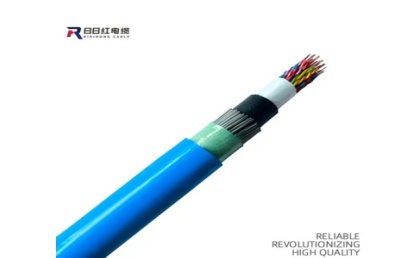
Continuous exposure to high temperatures accelerates insulation aging. Selecting materials with adequate thermal ratings—such as XLPE for 90°C operation or silicone for up to 200°C—is vital to ensure long-term reliability.
Water ingress can cause insulation swelling, corrosion, and dielectric failure. Moisture-resistant materials like EPR or water-blocking designs are preferred in underground or marine environments.
Cables exposed to bending, vibration, or tension must use flexible materials and proper armoring. Insufficient mechanical protection can lead to cracks or micro-tears in the insulation.
Voltage surges or overloads can degrade insulation over time. Proper shielding and grounding minimize electrical stress and help dissipate transient voltages safely.
Even the best-designed cable can fail prematurely if installed improperly. Bending radius, pulling tension, and jointing techniques must adhere to manufacturer specifications to preserve insulation integrity.
Ensuring the long-term performance of power cables requires rigorous testing. Manufacturers conduct standardized tests to verify mechanical strength, dielectric performance, and resistance to environmental stress.
Common tests include:
Dielectric strength test: Measures the insulation’s ability to withstand high voltage without breakdown.
Insulation resistance test: Ensures electrical isolation between conductors.
Thermal aging test: Evaluates long-term stability under continuous heat exposure.
Water penetration test: Verifies moisture resistance, especially for buried or underwater cables.
Flame retardancy test: Confirms that the cable meets fire safety standards.
Such quality control procedures guarantee that cables maintain safety and efficiency throughout their service life.
With the rise of renewable energy, smart grids, and electric mobility, the demand for advanced power cables is growing rapidly. New technologies are focusing on improving insulation reliability, sustainability, and performance.
Traditional PVC releases halogens and toxic fumes when burned. Modern insulation materials like Low Smoke Zero Halogen (LSZH) compounds reduce fire-related hazards, making them ideal for public buildings, transportation, and offshore platforms.
Nanotechnology has enabled the development of insulation materials with enhanced dielectric strength, thermal resistance, and mechanical stability. These innovations help cables operate at higher voltages with smaller dimensions, reducing installation space and costs.
As automation and communication systems become more interconnected, power cables must handle complex electromagnetic environments. Hybrid shielding combining conductive polymers and metallic layers provides both flexibility and superior EMI suppression.
Modern cables are increasingly being embedded with sensors that monitor temperature, insulation condition, and fault locations in real time. These “smart cables” improve predictive maintenance and minimize downtime in critical systems such as data centers and power distribution networks.
The efficiency, safety, and lifespan of any power distribution system depend heavily on the quality of its insulation and shielding. As electrical systems evolve to meet the demands of modern industry and infrastructure, understanding these components is essential for engineers, builders, and maintenance professionals alike.
By selecting cables designed with advanced insulation materials and robust shielding, users can prevent failures, reduce maintenance costs, and ensure reliable power transmission in even the most challenging environments.
For manufacturers, contractors, or energy engineers seeking durable and high-performance power cables, visiting www.rrhcable.com is a great place to start. www.rrhcable.com. offers a range of expertly engineered cable solutions that combine safety, reliability, and innovation—tailored to meet the diverse needs of modern power systems.
