Views: 0 Author: Site Editor Publish Time: 2026-11-05 Origin: Site
In today’s rapidly advancing technological landscape, sensors function as the central nervous system of modern machinery. From autonomous vehicles navigating complex urban environments to smart industrial robotics executing precision tasks, data collection is continuous. However, a sensor is ultimately only as reliable as the physical wiring infrastructure that connects it.
Standard off-the-shelf wiring solutions frequently fail to meet the rigorous demands of specialized operational environments. This mismatch inevitably leads to signal degradation, mechanical failure, and costly system downtime. This is precisely where a custom sensor connection wiring harness becomes an indispensable engineering requirement. By deliberately tailoring every component from the internal conductor material to the outer protective jacket, engineers ensure flawless data transmission and stable power delivery.
Whether you are designing architectures for electric vehicles, heavy industrial machinery, or sensitive medical equipment, understanding the exact specifications required for your custom cable assembly is a crucial step before procurement. Let us systematically break down the key technical considerations for designing and sourcing an optimized custom wiring solution.
Environmental Resilience is Non-Negotiable: Customizing your harness allows engineers to specify materials engineered to withstand extreme temperatures, moisture ingress, chemical exposure, and continuous mechanical vibration.
Signal Integrity is Paramount: Proper shielding configurations and precise conductor selection protect sensitive sensor data from electromagnetic interference and unexpected power surges.
Component Synergy Matters: A high-performing system relies on the exact pairing of conductors, connectors, terminals, and jacketing materials to function as a cohesive unit.
Compliance Drives Safety: Ensuring your custom harness meets industry-specific certifications protects both your product's operational lifespan and your brand's market reputation.
Choosing the Right Partner: Selecting a manufacturing partner equipped with robust prototyping capabilities and dedicated engineering support is as critical as the design itself.
Generic wiring harnesses are manufactured for broad compatibility rather than specific optimization. Consequently, they often feature excess wire length. This extra length complicates routing and increases the risk of snagging within tight enclosures. When deployed in sensitive electronic environments, these excess loops act as unintended antennas. They capture stray electromagnetic noise and distort analog signals. Off-the-shelf solutions also frequently lack adequate shielding or utilize incompatible connectors that require bulky adapters. These compromises complicate the assembly process, introduce multiple points of failure, and ultimately degrade overall system performance.
Modern machinery imposes strict spatial constraints. A custom-designed interconnect solution is engineered to fit perfectly into designated routing paths. Consider the complex, confined layout of a vehicle door panel or the articulating joints of a robotic arm. By calculating exact lengths and specifying appropriate bend radii, custom designs significantly reduce mechanical stress on the cables. This precise physical integration prevents wire chafing, insulation cracking, and tension-related failures. Ultimately, it extends the operational lifespan of the entire sensor network.
Custom engineering requires an initial investment in design and prototyping. Yet, the long-term financial benefits are substantial. Tailored harnesses arrive pre-configured, labeled, and terminated precisely for your application. This drastically reduces manual labor and assembly time on the production floor. More importantly, standardizing a robust application-specific harness minimizes the probability of field failures. The cost of recalling a product, dispatching maintenance technicians, or experiencing unplanned industrial downtime far exceeds the initial engineering costs.
Sensors frequently operate in environments subject to severe temperature fluctuations. Automotive engine compartments may expose wiring to ambient temperatures exceeding 125 degrees Celsius. Conversely, aerospace applications might subject the same components to minus 50 degrees Celsius. Customization allows for the selection of specialized insulation and jacketing materials. Cross-linked Polyethylene or Polytetrafluoroethylene are standard choices for high-heat environments due to their thermal stability. Silicone or Thermoplastic Elastomer jackets maintain flexibility in sub-zero conditions, preventing the insulation from becoming brittle and fracturing during movement.
Ingress Protection ratings are a critical metric for any sensor connection. Operating environments exposed to continuous moisture, heavy dust, or submersion require harnesses rated at IP67 or IP68. In food processing or medical applications where high-pressure and high-temperature washdowns are routine, an IP69K rating is mandatory. Beyond water and dust, chemical compatibility must be evaluated. Sensors located in industrial machinery are regularly exposed to hydraulic fluids, solvents, and corrosive agents. Selecting materials like Polyurethane jacketing provides excellent resistance to oils and mechanical abrasion. This ensures the internal conductors remain isolated and protected.
Dynamic applications introduce severe mechanical stress. A sensor mounted on an automotive suspension system or a continuous-flex robotic track experiences constant vibration and multi-directional bending. To mitigate mechanical fatigue, custom solutions utilize high-strand-count conductors. These offer superior flexibility and a higher flex-cycle life compared to solid or low-strand wires. Additionally, the routing strategy must incorporate durable strain reliefs at connector junctions. This absorbs physical tension and prevents the wire from pulling away from the terminal crimp under continuous vibration.
As the Industrial Internet of Things and edge computing continue to evolve, the industry is witnessing a massive shift toward sensor miniaturization and high-density data collection. Analysts note that the wire harness market is moving rapidly away from commoditized cables. The focus is now on highly engineered, application-specific interconnects. Modern systems demand higher bandwidth and incredibly tight impedance tolerances to process complex data streams. Technologies like high-resolution machine vision and LiDAR cannot tolerate latency. This industry trend underscores exactly why prioritizing signal integrity is more critical today than ever before.
Sensors typically transmit low-voltage analog or digital signals that are highly susceptible to ambient electrical noise. When routed near high-voltage power lines, electric motors, or radio frequency transmitters, unprotected sensor wires absorb interference. Effective noise management requires precise shielding strategies within your tailored sensor wiring harness. Aluminum foil shielding provides comprehensive coverage against high-frequency noise but is mechanically fragile. Tinned copper braid shielding offers excellent structural integrity and low-frequency protection. For mission-critical applications, a combination shield featuring both foil and braid is deployed to guarantee absolute data integrity.
Matching the American Wire Gauge and conductor material to the sensor's specific electrical profile is fundamental. Using a wire gauge that is too small for the required current leads to excessive resistance, heat generation, and voltage drop. This causes the sensor to malfunction or report delayed data. For high-speed digital sensors, the harness must also maintain strict impedance control to prevent signal reflection. Custom manufacturing ensures that the twist rate of wire pairs and the dielectric constant of the insulation are precisely calibrated.
When multiple sensor cables are bundled together within a single assembly, the electromagnetic field from one wire can induce a signal in an adjacent wire. This phenomenon is known as cross-talk. To prevent this, engineers utilize twisted pair configurations. The two conductors of a single circuit are twisted together to cancel out electromagnetic emissions. Furthermore, critical sensor lines can be individually shielded before being bundled into the main harness. Strategic pinout layouts at the connector interface also ensure sensitive data lines are physically separated from noisy power lines.
A high-performing harness relies on the exact pairing of its core components. Instead of relying on guesswork, engineers must match material properties directly to field conditions. Below is a practical selection matrix based on standard industrial parameters.
Component | Material / Specification | Best Application Scenario |
|---|---|---|
Outer Jacket | Polyurethane | Robotics, heavy machinery. High oil, chemical, and abrasion resistance. |
Outer Jacket | Polyvinyl Chloride | Static indoor environments. Cost-effective general purpose routing. |
Outer Jacket | Thermoplastic Elastomer | Extreme cold environments. Maintains high flexibility at sub-zero temperatures. |
Conductor | Tinned Copper | Marine and high-moisture areas. Excellent corrosion resistance. |
Conductor | Silver-Plated Copper | Aerospace and medical. High-speed data and extreme temperature tolerance. |
Terminals | Gold-Plated Contacts | Low-voltage sensor signals. Resists oxidation and maintains low contact resistance. |
The foundation of any reliable harness is the conductor material. The choice depends on a delicate balance of conductivity, corrosion resistance, and budget. Bare copper offers high conductivity and is cost-effective for general industrial sensors in dry indoor environments. Tinned copper provides excellent corrosion resistance and easy solderability. A harness is ultimately only as secure as its termination points. Quick-disconnect connectors are ideal for components requiring frequent maintenance. Threaded locking mechanisms provide necessary security against extreme vibration.
The rapidly expanding electric vehicle market presents unique wiring challenges. Sensor harnesses must safely coexist with high-voltage battery systems. This requires specialized shielding to prevent catastrophic interference. Furthermore, weight reduction is a primary objective in vehicle engineering to maximize battery range. Custom harnesses in this sector often utilize ultra-thin-wall insulation and optimize routing paths to eliminate every unnecessary gram of copper.
Smart factories rely on continuous data flow from thousands of distributed sensors. In robotic assembly lines, cables are subjected to millions of bending and twisting cycles. Harnesses designed for industrial automation prioritize continuous-flex cables with specialized geometries. PTFE tape wrapping over the conductor bundles is often used to reduce internal friction. High-speed industrial protocols dictate that these industrial sensor cable assemblies maintain strict electrical characteristics to prevent packet loss during rapid machine movements.
Medical and aerospace applications operate under the strictest regulatory frameworks. Sensor harnesses attached to patient-monitoring equipment or surgical tools must utilize biocompatible materials and withstand repeated sterilization cycles in high-temperature autoclaves. In aerospace, the primary directives are extreme weight reduction, flame retardance, and low outgassing properties. Harnesses must perform flawlessly in low-pressure and high-radiation environments.
A custom wiring harness must comply with established international standards to guarantee safety and interoperability. General industrial applications require Underwriters Laboratories recognition and adherence to Restriction of Hazardous Substances directives. For automotive applications, compliance with IATF 16949 is mandatory. This ensures the manufacturer adheres to automotive-specific quality management systems. Medical devices require ISO 13485 certification, dictating strict traceability and risk management protocols.
Quality assurance cannot rely on visual inspection alone. Empirical testing is required to validate the electrical and mechanical integrity of the custom harness. Top-tier manufacturers employ automated testing protocols before a product is deployed. Continuity testing verifies that all pinouts are correct and no open circuits exist. Pull-force testing ensures that the terminal crimps meet mechanical strength requirements. High Potential testing applies a high voltage across the insulation to detect micro-fractures or dielectric weaknesses that could lead to short circuits in the field.
Selecting a manufacturing partner is a critical strategic decision. The ideal partner functions as an extension of your engineering team. Buyers should prioritize manufacturers who offer comprehensive design for manufacturability support. This includes evaluating initial models, suggesting material alternatives to improve performance, and identifying potential failure points before production begins. Rapid prototyping capabilities are essential. Obtaining a physical sample allows for real-world fitment testing and electrical validation.
A brilliantly designed harness is useless if it cannot be delivered on schedule. Evaluating a manufacturer's supply chain resilience is crucial. A competent manufacturer must efficiently transition from producing a small batch of prototypes to outputting tens of thousands of units per month without degrading quality. Transparent communication regarding component lead times, buffer stock management, and localized warehousing options are key indicators of a reliable partner. By sourcing a highly engineered customized sensor connection harness, you secure your system's long-term stability.
A custom sensor connection wiring harness is not just a simple bundle of wires. It is a highly engineered component critical to the success and longevity of your entire system. By carefully evaluating environmental factors, precise electrical needs, component synergy, and strict compliance standards, you ensure optimal performance in the field.
Cutting corners on sensor wiring inevitably leads to signal degradation and costly system failures. Investing in a tailored solution designed for your exact application is the smartest engineering decision you can make to safeguard your equipment. Are you ready to design a harness that meets your exact specifications? Explore premium, field-tested solutions at RRH Cable and contact our engineering team today to discuss your project and request a comprehensive quote.
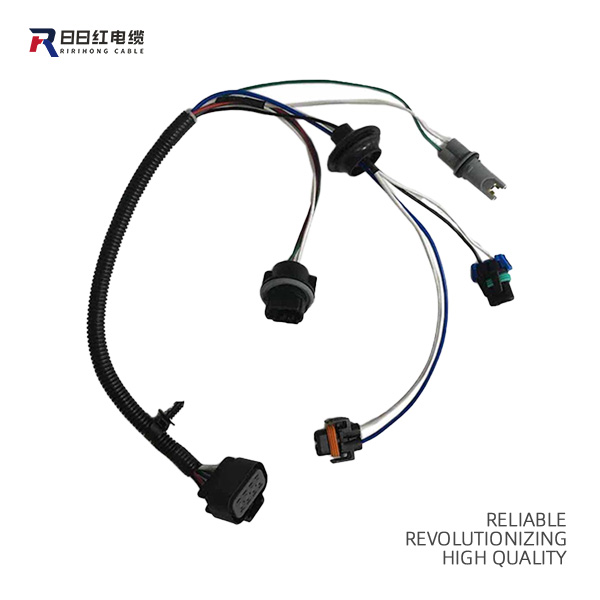
A sensor connection wiring harness is a customized assembly of cables, wires, connectors, and protective sleeves designed specifically to transmit power and data between a sensor and a control unit. It is uniquely tailored to withstand the specific environmental and electrical conditions of its intended application.
The timeline varies based on the complexity of the design. Initial engineering and prototyping can take anywhere from a few days to a few weeks. Once the prototype is approved and validated, mass production lead times depend on component availability and order volume, typically ranging from two to six weeks.
To receive an accurate quote, you should provide a schematic or technical drawing, details on the types of sensors being connected, required wire lengths and American Wire Gauge sizes, specific connector models, environmental conditions like temperature extremes, and any required industry certifications.
Yes. Custom harnesses for electric vehicles are specifically engineered with high-voltage rated insulation, specialized shielding to prevent electromagnetic interference, and robust high-power connectors to ensure safety and peak performance in demanding high-voltage architectures.
Sensors often transmit very delicate, low-voltage signals. Without proper shielding, electromagnetic interference from nearby power cables, industrial motors, or radio frequencies can distort these fragile signals. This leads to inaccurate sensor readings, data latency, and overall system malfunctions.
Choosing the correct American Wire Gauge depends on evaluating the current draw of the sensor, the total cable length, and the acceptable voltage drop. American Wire Gauge 22 to 26 is typical for low-power signal transmission, while higher current applications or longer runs may require gauge 16 or 18 to prevent excessive resistance.
Polyvinyl Chloride is a cost-effective material suitable for static, indoor applications where extreme stress is minimal. Polyurethane offers vastly superior resistance to cutting fluids, oils, chemicals, and mechanical abrasion, making it the mandatory choice for dynamic robotic tracking and heavy industrial machinery.