
Views: 0 Author: Site Editor Publish Time: 2025-11-19 Origin: Site
Mining is one of the harshest industrial environments imaginable. Deep underground tunnels, abrasive rocks, heavy machinery, moisture, and explosive dust create conditions that push every piece of equipment to its limits — including the electrical cables that power mining operations. In such environments, reliability and safety are not optional; they are essential.
That’s where mining cables come in. Unlike standard power cables used in homes or commercial buildings, mining cables are specially engineered to withstand mechanical stress, extreme temperatures, and chemical exposure while maintaining electrical integrity and safety.
Mining cables serve as the lifelines of electrical power in both surface and underground mining operations. They supply energy to drills, conveyors, pumps, crushers, and lighting systems—equipment that must operate continuously in demanding conditions. These cables must be flexible enough to move with machinery, durable enough to resist mechanical wear, and safe enough to prevent fires or electrical shocks.
Unlike fixed installations in homes or factories, mining equipment often requires mobile power connections, where cables are dragged, twisted, or crushed during use. Therefore, mining cables must combine mobility, toughness, and electrical performance in one design.
Standard power cables, by contrast, are designed for static environments with controlled conditions — clean, dry, and relatively temperature-stable. They lack the mechanical protection and insulation properties needed to survive in a mine.
Mining cables differ from conventional power cables in several fundamental aspects: construction, insulation, mechanical reinforcement, flexibility, and safety performance.
A mining cable’s construction begins with extra-heavy-duty materials. While a standard cable may have simple copper conductors and PVC insulation, mining cables use high-grade tinned copper, cross-linked polyethylene (XLPE), or EPR (ethylene propylene rubber) for superior conductivity, moisture resistance, and heat stability.
Their outer sheaths are typically made from neoprene, chlorinated polyethylene (CPE), or polyurethane (PUR) — materials chosen for resistance to oil, flame, abrasion, and chemical corrosion. The outer jacket is thicker than that of a standard cable and often includes reinforced layers to absorb impact and prevent tearing.
Mining environments require cables to move constantly — winding on reels, bending around corners, or trailing behind mobile machinery. Therefore, mining cables feature multi-stranded conductors with fine wire strands that allow exceptional flexibility.
Standard power cables, however, are relatively rigid because they are meant for fixed installations. Using them in a mining environment would cause rapid conductor fatigue and insulation cracking.
Mining cables include multiple protective layers, such as textile or steel braid reinforcement, designed to resist crushing, impact, and tension. They may also include separators or fillers that maintain shape and absorb shock under compression.
In contrast, standard cables usually rely on a single insulation layer and a thin sheath, which would fail under mechanical pressure or abrasion from rocks and equipment.
Because mining operations often take place in confined underground areas where gas or dust explosions are possible, fire resistance is a top priority. Mining cables use flame-retardant and low-smoke materials to limit the spread of fire and reduce toxic emissions.
Standard power cables may meet general flame-retardant codes, but they are not designed for such hazardous environments. The use of improper cables underground could lead to catastrophic consequences.
Mining cables must also withstand exposure to oil, fuel, moisture, acid, and alkalis. Special compound coatings prevent water ingress and chemical corrosion. In contrast, standard cables often degrade quickly when exposed to such substances, leading to insulation breakdown and short circuits.
Mining cables are designed from the ground up with safety in mind. Electrical accidents underground can endanger lives and halt production, so every feature of a mining cable contributes to protection and reliability.
Mining cable insulation is designed to resist electrical leakage, corona discharge, and dielectric breakdown. The materials must remain stable even when exposed to high voltage, heat, or mechanical deformation.
Many mining cables include integrated grounding conductors and metallic shields to protect workers and equipment from electrical faults. These shields ensure any leakage current is safely directed away, reducing the risk of electric shock.
To meet strict mining safety regulations, mining cables undergo flame tests, smoke density tests, and toxicity tests. The use of halogen-free compounds ensures minimal smoke and no corrosive gases in case of a fire, preserving visibility and equipment longevity.
Cables in mines are frequently dragged across rocky surfaces, run over by vehicles, or compressed under heavy loads. Reinforced sheaths prevent external damage, while internal fillers and binders help maintain structural integrity. These safety features ensure that cables do not short-circuit even under extreme physical stress.
The second defining trait of mining cables is their exceptional durability. They are expected to perform flawlessly under conditions that would quickly destroy ordinary cables.
Mining operations may occur in extreme temperatures—from freezing tunnels to hot open-pit conditions. Mining cables are rated for wide temperature ranges, typically between -40°C and +90°C, without losing flexibility or insulation properties.
For surface mining applications, cables are exposed to sunlight, rain, and dust. Weather-resistant jackets protect them from ultraviolet radiation and ozone degradation, ensuring long-term performance outdoors.
Mining cables are subjected to continuous bending, twisting, and vibration. Their multi-layer construction—including fillers, tapes, and strong outer jackets—helps them absorb shock and maintain conductivity, even after years of mechanical stress.
Thanks to their robust build, mining cables offer a longer service life and require less frequent replacement. This not only reduces maintenance costs but also minimizes downtime, keeping mining operations productive and safe.
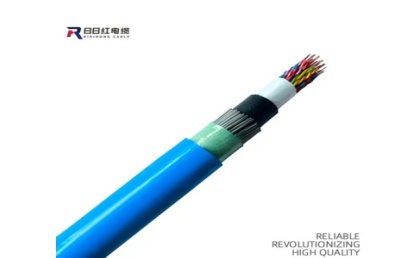
There are several types of mining cables, each tailored to specific equipment and voltage requirements:
Reeling and trailing cables: Designed for continuous movement on reels or behind mobile equipment such as shovels, drills, and conveyors.
Power feeder cables: Used for fixed installations providing power to stationary equipment.
Control and instrumentation cables: Carry low-voltage signals for automation, communication, and monitoring systems.
Portable power cables: Supply power to temporary or mobile equipment in flexible configurations.
Each type must meet distinct standards for flexibility, abrasion resistance, and electrical performance.
Mining cables are subject to rigorous testing and certification by organizations such as ICEA, MSHA, UL, and IEC. These standards specify mechanical strength, electrical properties, fire resistance, and chemical stability to ensure safety and performance in mining operations.
Compliance with these standards ensures that mining cables can safely operate in high-risk environments where equipment failure is unacceptable.
Investing in high-quality mining cables may seem costly initially, but the return on investment is significant when considering the entire lifecycle of a mining project.
Cable failures can halt production and cause costly downtime. Durable mining cables minimize such disruptions, ensuring continuous operation and higher productivity.
Mining cables are designed for long-term reliability, reducing the frequency and cost of maintenance or replacements. Their extended lifespan compensates for the higher upfront cost.
Using cables that meet mining-specific standards helps companies avoid safety violations, insurance penalties, and legal liabilities. Reliable cables protect workers, equipment, and investments.
High-quality copper conductors and low-resistance insulation contribute to better energy transmission efficiency, lowering power losses and improving overall operational performance.
As the mining industry embraces automation and electrification, mining cable technology continues to evolve.
New trends include:
Smart monitoring systems that track cable wear, temperature, and load conditions in real time.
Eco-friendly insulation materials that reduce environmental impact without compromising performance.
Hybrid cables combining power and data transmission to support intelligent mining systems.
Improved flexibility and lightweight designs that simplify installation and enhance mobility for automated machinery.
These innovations aim to make mining safer, more efficient, and sustainable for the future.
Mining cables are far more than simple conductors — they are engineered lifelines that ensure the safe and efficient operation of modern mining systems. Their reinforced construction, superior materials, and advanced insulation technologies make them resilient against heat, moisture, abrasion, and mechanical stress, distinguishing them sharply from standard power cables.
By choosing high-quality mining cables, mining companies can enhance safety, extend equipment life, and maintain consistent productivity even in the harshest conditions.
For reliable, high-performance mining cable solutions designed to meet the toughest industry demands, visit www.rrhcable.com.
www.rrhcable.com specializes in durable, safety-certified cables for mining, tunneling, and heavy industrial applications. To learn more about their full range of mining cable products—or to consult their technical team for customized solutions—you can explore their website or contact them directly for expert guidance.
