
Views: 0 Author: Site Editor Publish Time: 2025-11-09 Origin: Site
In the modern age of smart manufacturing and digital transformation, communication cables have become the backbone of connectivity across industrial environments. From automated production lines to remote sensor monitoring and data-driven decision-making, the seamless transmission of information is essential. While wireless networks often grab the spotlight, wired communication—especially through robust industrial-grade cables—remains the most reliable and secure medium for critical operations.
Industrial automation and the Internet of Things (IoT) depend on the ability to collect, process, and exchange data efficiently. This requires communication infrastructure that can withstand harsh conditions, resist interference, and support real-time data transfer with minimal latency. In this context, high-quality communication cables play an indispensable role.
Communication cables are designed to transmit signals between devices, systems, and networks. In industrial environments, these cables connect sensors, controllers, actuators, machines, and centralized data systems. Their performance directly affects automation precision, process reliability, and overall productivity.
Unlike consumer-grade data cables, industrial communication cables must operate under extreme conditions—exposure to heat, vibration, chemicals, moisture, and electromagnetic interference (EMI). As a result, they are built with specialized insulation, shielding, and materials that guarantee stable signal transmission and long service life.
Several types of communication cables are used in industrial automation and IoT systems:
Ethernet Cables (Cat5e, Cat6, Cat7): Commonly used for network-based communication such as Industrial Ethernet, PROFINET, or EtherCAT. They provide high-speed data transmission with low latency.
Fieldbus Cables (PROFIBUS, CANbus, DeviceNet): Designed for distributed control systems where devices communicate through a shared bus structure.
Fiber Optic Cables: Offer long-distance, high-bandwidth communication and immunity to electromagnetic interference—ideal for large facilities and data-intensive applications.
RS-485 / RS-422 Cables: Widely used for serial communication between controllers, sensors, and machines in legacy and modern systems.
Hybrid Cables: Combine power and data transmission within a single cable, simplifying installation and reducing space requirements.
Each cable type has unique benefits depending on network topology, data rate requirements, and environmental conditions.
Automation in modern industries depends on one critical element—seamless communication. Every motion of a robotic arm, every conveyor belt adjustment, and every sensor feedback must be transmitted, processed, and executed within milliseconds. Communication cables form the physical foundation of this data exchange, ensuring that signals travel swiftly, accurately, and without interruption. In essence, they act as the nervous system of automated factories, delivering vital information between machines, controllers, and monitoring systems to maintain precision and productivity.
In automated environments, timing is everything. Industrial systems rely on real-time communication between Programmable Logic Controllers (PLCs), sensors, actuators, and Human-Machine Interfaces (HMIs). Ethernet and Fieldbus cables provide deterministic communication, meaning data packets arrive in the correct order and on time. This predictability ensures synchronized movements across production lines—critical for robotics, packaging, and process automation. High-speed communication cables also support low-latency feedback loops, allowing systems to adjust instantly to changes in load, temperature, or material flow, thereby improving precision and reducing errors.
In industrial automation, even a few seconds of communication loss can stop entire production lines, leading to costly downtime. High-performance communication cables with multi-layer shielding, braided conductors, and reinforced insulation are engineered to withstand electromagnetic interference (EMI), high vibration, and temperature extremes. Some designs include redundant signal paths or fail-safe shielding to ensure uninterrupted data transmission. By maintaining robust and consistent connectivity, these cables enhance system reliability and protect against data corruption, ensuring smooth, continuous operations.
The rise of Industrial Internet of Things (IIoT) has transformed maintenance strategies. Communication cables now play a vital role in predictive maintenance, carrying real-time data from vibration sensors, temperature probes, and pressure transducers to centralized analytics systems. This information helps engineers identify early warning signs of equipment fatigue or imbalance. With timely intervention, operators can prevent unplanned breakdowns, reduce repair costs, and extend the lifespan of machinery—maximizing overall efficiency and safety.
Industrial automation operates through multiple hierarchical levels—from device-level field communication to supervisory and enterprise systems. Communication cables provide the physical link that connects all these layers, ensuring smooth information flow between machine controllers, SCADA systems, and cloud-based monitoring platforms. This interconnected network supports advanced manufacturing concepts like Industry 4.0, enabling smart factories that self-optimize and respond dynamically to production demands.
The Industrial Internet of Things (IIoT) integrates sensors, devices, and machines into a unified digital ecosystem. While wireless networks play a role, wired communication remains essential in applications demanding reliability, low latency, and security.
Every IoT device—from temperature sensors to robotic arms—relies on a communication link to transmit collected data. In manufacturing, energy, and logistics sectors, Ethernet and fiber optic cables serve as the backbone for connecting gateways, controllers, and cloud servers. These cables ensure fast, lossless transmission of massive data volumes required for AI-driven analysis and decision-making.
Industrial IoT systems handle sensitive production data and control signals. Wired communication cables offer superior protection against data breaches and signal interception compared to wireless alternatives. Shielded cables with metallic or braided layers block electromagnetic interference (EMI) and radio frequency interference (RFI), ensuring signal integrity even in noisy environments.
Modern factories employ thousands of smart sensors embedded in machines, conveyors, and storage areas. These sensors are often connected via communication cables that deliver both data and power (Power over Ethernet – PoE). This integration simplifies network architecture, reduces cable clutter, and supports real-time data acquisition for process optimization.
As IoT networks grow, communication cables provide scalable infrastructure that supports additional devices without compromising speed or stability. Modular cabling systems with standardized connectors allow easy expansion or reconfiguration, making them ideal for evolving production facilities.
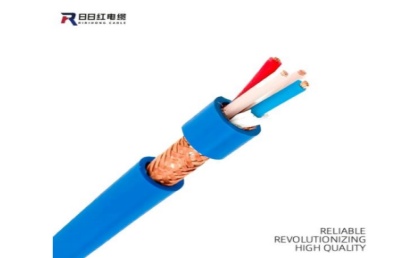
When selecting communication cables for industrial automation and IoT applications, several performance characteristics are critical:
The ability to transmit data with minimal signal loss ensures consistent communication between devices. Factors such as conductor material, shielding design, and impedance matching directly influence performance.
Cables in moving machinery or robotic systems must withstand continuous bending, torsion, and vibration. Flexible industrial-grade cables are designed with stranded copper conductors and high-resilience insulation materials to prevent breakage.
Industrial environments expose cables to heat, oil, water, and chemicals. High-temperature-resistant jackets (such as PVC, PUR, or TPE) and UV protection ensure longevity even under extreme conditions.
Reliable communication cables comply with global standards such as ISO/IEC 11801, TIA/EIA, or specific industrial network protocols (PROFIBUS, EtherNet/IP, etc.). Compliance guarantees interoperability and consistent performance across diverse systems.
In enclosed facilities, fire safety is critical. Flame-retardant and low-smoke halogen-free (LSHF) communication cables reduce fire propagation and toxic emissions, enhancing workplace safety.
The rapid evolution of industrial automation and IoT continues to push cable technology forward. Some of the latest trends include:
High-Speed Data Transmission: New Ethernet standards (up to 10 Gbps) enable faster machine-to-machine communication.
Hybrid Cables: Combining power and data lines in one cable simplifies installation and reduces maintenance complexity.
Fiber-to-the-Machine (FTTM): The adoption of fiber optics in factory networks ensures high bandwidth and EMI immunity for demanding applications.
Smart Cables: Embedded sensors within cables can monitor temperature, strain, and signal quality, supporting predictive maintenance and early fault detection.
Eco-Friendly Materials: Manufacturers are increasingly adopting recyclable and halogen-free materials to meet sustainability goals.
These innovations are redefining how industries approach connectivity, making cable systems smarter, safer, and more efficient.
Selecting the proper communication cable depends on several key considerations:
Application Environment – Indoor, outdoor, wet, or high-temperature conditions require specific jacket materials and protective features.
Data Transmission Requirements – High-speed networks may demand Cat6A or fiber optic solutions.
Distance and Topology – For long runs, fiber optics minimize signal loss; for shorter links, copper cables remain cost-effective.
Mechanical Stress – Flexible or torsion-resistant cables are essential for robotics and moving applications.
Regulatory Compliance – Always ensure cables meet relevant fire safety and industrial network standards.
Partnering with a reputable cable manufacturer ensures that these factors are correctly balanced for optimal system performance.
Communication cables are the nervous system of industrial automation and IoT integration. They enable the continuous, reliable exchange of data that powers intelligent decision-making, operational efficiency, and predictive maintenance. Despite the growing presence of wireless technologies, wired communication remains irreplaceable in mission-critical environments where safety, precision, and reliability are paramount.
As industries move toward smarter, more connected operations, the demand for durable, high-performance communication cables will continue to rise. Whether for Ethernet, fiber optics, or hybrid power-data systems, selecting the right cable is an investment in long-term productivity and operational resilience.
For businesses seeking reliable and high-quality communication cables for industrial automation and IoT systems, www.rrhcable.com offers comprehensive solutions tailored to diverse applications. Their expertise in cable design, manufacturing, and performance engineering ensures dependable connectivity across the most demanding industrial environments.
