
Views: 0 Author: Site Editor Publish Time: 2026-04-05 Origin: Site
When people want faster internet, they often think first about upgrading their router, changing their broadband plan, or moving closer to the Wi-Fi signal. Yet one of the most overlooked parts of a high-performance connection is the network cable itself. A poor-quality or outdated cable can create a bottleneck that limits speed, stability, and overall network performance, even if the rest of the setup is modern. For homes, offices, gaming rooms, data-heavy workstations, and commercial environments, the right cable can make a visible difference in data transfer efficiency, streaming quality, online gaming responsiveness, and long-term network reliability. That is why understanding the Top 5 Network Cables for Lightning-Fast Internet Speeds is useful not only for IT professionals, but also for homeowners, installers, distributors, and businesses that want stronger wired connectivity without unnecessary guesswork.
In the age of powerful wireless systems, some users assume that cables are no longer important. In reality, wired connections remain the most stable option for many demanding applications. A good high-speed ethernet cable helps reduce signal loss, supports higher bandwidth, improves latency performance, and delivers more dependable connectivity over time.
This matters especially for:
· 4K and 8K streaming
· cloud-based work
· online gaming
· video conferencing
· smart home systems
· office networks
· industrial and commercial data transmission
If the cable is not rated for the speed your network equipment can support, the whole system may perform below its potential. In other words, a fast internet plan cannot fully help if the physical connection is holding everything back.
Not all Ethernet cables are built the same way. Cable speed depends on several technical factors, including category rating, shielding structure, conductor quality, bandwidth capacity, and transmission distance.
Key factors include:
· supported data rate
· bandwidth frequency
· shielding against interference
· internal conductor quality
· connector consistency
· installation environment
For example, a short cable in a home office may work perfectly with Cat6, while a more demanding commercial environment with heavy interference may require better shielding and higher category performance. That is why cable selection should match the application rather than focus only on the highest number available.
Before looking at each option in detail, the table below provides a practical overview of the most common cable choices for fast and stable internet.
Cable Type | Typical Speed | Bandwidth | Best Use Case | Main Advantage |
Cat5e | Up to 1 Gbps | 100 MHz | Basic home and office use | Affordable and widely available |
Cat6 | Up to 1 Gbps to 10 Gbps (short distance) | 250 MHz | Home upgrades, gaming, streaming | Strong balance of speed and cost |
Cat6a | Up to 10 Gbps | 500 MHz | Offices, heavy streaming, longer runs | Better high-speed performance over distance |
Cat7 | Up to 10 Gbps | 600 MHz | Shielded environments, premium setups | Strong shielding and stable transmission |
Cat8 | Up to 25/40 Gbps (short distance) | 2000 MHz | Data centers, advanced commercial use | Extremely high bandwidth and speed |
This table makes one thing clear: the best network cable is not always the highest category. The right choice depends on budget, environment, distance, and actual speed requirements.
Cat5e is still widely used because it remains practical for many standard internet applications. It supports up to 1 Gbps under normal conditions, which is enough for basic households, general office use, HD streaming, and everyday browsing.
· lower cost
· broad compatibility
· easy availability
· suitable for moderate-speed connections
However, Cat5e is no longer the ideal choice for users who want more future-proof performance. It can work well for routine use, but if you expect higher data traffic, multiple connected devices, or long-term upgrades, newer categories offer more room to grow.
Cat5e is best viewed as a functional baseline rather than the strongest option for truly lightning-fast internet speeds.
For many buyers, Cat6 is the most practical answer when searching for a high-speed ethernet cable. It supports higher bandwidth than Cat5e and can handle up to 10 Gbps over shorter distances, while maintaining strong performance for home networks, gaming setups, and office systems.
Cat6 works well for:
· high-speed home broadband
· smart TVs and streaming boxes
· work-from-home setups
· gaming consoles and gaming PCs
· small business networks
This is one reason Cat6 is often considered one of the best network cables for gaming. It offers lower interference, more reliable data transmission, and a strong balance between affordability and performance. For most users who want fast, stable, and future-ready wired internet, Cat6 is often the starting point worth considering.
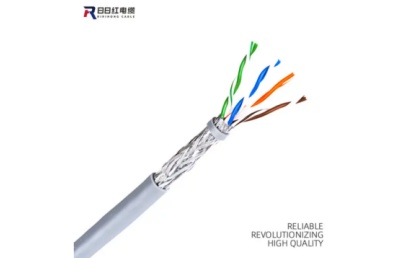
Cat6a builds on Cat6 by offering higher bandwidth and better 10 Gbps performance across longer distances. This makes it a better option for larger spaces, more demanding commercial networks, or environments where stable high-speed transmission matters throughout the full cable run.
Its stronger specifications help it maintain higher performance without dropping as quickly over distance. It is also often designed with better shielding or improved internal separation to reduce crosstalk.
Cat6a is a smart option for:
· larger homes with central wiring
· offices with many connected devices
· media-heavy work environments
· users planning network upgrades in stages
Compared with Cat6, Cat6a is thicker and sometimes less flexible, but it offers a stronger long-term performance profile. For many commercial buyers, it represents a practical balance between modern speed needs and installation realism.
Cat7 entered the market as a more shielded cable option designed to reduce interference and support strong performance in demanding environments. It is often associated with premium installations where signal consistency is important.
Cat7 advantages include:
1. strong shielding
2. solid data stability
3. better resistance to electromagnetic interference
4. suitable for high-performance network environments
Because of its heavier shielding, Cat7 can be appealing in commercial spaces, industrial areas, or installations where many electrical systems are operating nearby. For users comparing Cat6 vs Cat8 cable, Cat7 often sits in the middle as a more premium but still practical choice for stable 10 Gbps applications.
That said, Cat7 is not always necessary for an average home. Its benefits are most visible when interference control and premium performance are priorities.
If your focus is maximum bandwidth and very high data rates, Cat8 stands at the top of the common Ethernet cable categories. It is designed for environments that need exceptionally fast transmission, such as server rooms, data centers, and highly demanding commercial systems.
Cat8 is ideal for:
· short-run ultra-fast connections
· advanced server and switch environments
· commercial infrastructure with very high throughput
· specialized future-focused installations
Cat8 can support much higher speeds than standard residential setups normally require. This is why it is not always the best value for a simple home internet connection. Still, for buyers seeking the highest category in the Top 5 Network Cables for Lightning-Fast Internet Speeds, Cat8 clearly belongs on the list.
The main point is this: Cat8 is powerful, but it should be selected for real performance needs, not only for the appeal of bigger numbers.
The search for the Top 5 Network Cables for Lightning-Fast Internet Speeds is really about finding the right balance between speed, stability, budget, and future readiness. Cat5e still covers basic needs, Cat6 remains the strongest all-around choice for many users, Cat6a offers more consistent 10 Gbps performance, Cat7 adds premium shielding, and Cat8 leads in specialized high-speed environments. The best solution depends on where the cable will be used and how much network demand it is expected to handle over time. In our view, a good cable should not only meet current requirements, but also provide dependable performance as networks continue to evolve. At RRH CABLE. Co., Ltd., we pay close attention to cable quality, application needs, and long-term connectivity value. If you want to learn more about selecting the right cable type for home, office, or commercial projects, you are welcome to explore more information with our team from a practical and professional perspective.
Yes. Cat6 is more than capable of supporting gigabit internet and is often a strong choice for homes, gaming setups, and office networks.
Not always. A higher-category cable only helps if the rest of the network equipment and connection environment can actually use that higher performance.
Shorter cable runs generally help maintain signal quality more easily, though properly rated cables can still perform very well across their intended maximum distances.
That depends on the environment. Shielded cables are useful where there is more electrical interference, while unshielded cables are often sufficient for standard home and office settings.
